
Why Autumn Matters
Autumn is often called the season of change – leaves turn gold, days grow shorter, and the harvest comes in abundance. It’s a time to enjoy the outdoors, autumn activities before winter, to gather what nature provides, and to create small rituals that connect us with the season. From children’s crafts with colorful leaves and chestnuts, to foraging roots, berries, and mushrooms, autumn invites us to slow down, preserve food, and enjoy cultural traditions that stretch across the globe.
Autumn Activities With Children
The simplest joy of autumn is being outside with kids and turning nature into play:
-
Chestnuts and acorns – with a few toothpicks and string, children can build animals, people, or little houses.
-
Colorful leaves – collect and press them for collages, bookmarks, or garlands. Younger children love printing with leaves (cover in paint, press onto paper).
-
Nature games – try a “color hunt” (find five different shades of yellow or red), or build mandalas on the ground using leaves, stones, and seeds.
-
Pumpkin lanterns and paper lantern walks – a magical way to bring light into darker evenings.
Quick tip: When collecting leaves for crafts, press them between newspaper sheets with a heavy book on top. In two days, they’re flat and ready to use.

Autumn Bounty: Herbs, Fruits, and Roots
Autumn is more than just apples and pumpkins – it’s also a season for roots, berries, and immune-supporting herbs.
-
Rosehips – naturally high in vitamin C, dried for teas or boiled into syrup.
-
Elderberries – always cooked, never eaten raw; great for syrups and jellies.
-
Rowan berries and sea buckthorn – tart but vitamin-packed, used in juices and jams.
-
Roots like dandelion and horseradish – dandelion root can be roasted for a coffee-like drink or simmered for a digestive tea; horseradish adds a spicy punch and is a traditional natural antibiotic.
-
Late herbs – thyme and plantain are often collected until the first frosts.
Mini how-to: Drying rosehips for tea
Cut rosehips in half, scoop out seeds, and dry the shells on a tray in a warm, airy place. Once crisp, store them in a jar. A teaspoon in hot water makes a tangy, warming tea.
Autumn Fruit Harvest
Late apples, pears, and plums sweeten the air in September and October. Traditionally, families would:
-
press apples for cider or juice,
-
dry slices into crispy “fruit chips”,
-
Simmer apple butter or plum jam,
-
or store fruit in cool cellars layered with straw or paper.
Quick tip: Keep apples in a wooden crate with paper between layers. Remove any damaged fruit immediately, or one rotten apple will spoil the rest.
Mushrooms: A Seasonal Treasure
Autumn is peak mushroom season across much of Europe, Asia, and North America.
-
Porcini, chanterelles, parasols, saffron milk caps – prized in kitchens.
-
Preserve them by drying, freezing, or pickling.
-
Mushrooms are rich in fiber, B vitamins, and immune-supporting compounds (National Library of Medicine confirms their nutritional value).
Mini how-to: Drying mushrooms
Slice them thin, lay on a mesh rack, and dry in a warm place or in the oven at low heat (max 50 °C / 120 °F). Store in glass jars – they keep flavor for years.
Fermentation and Preserving for Winter
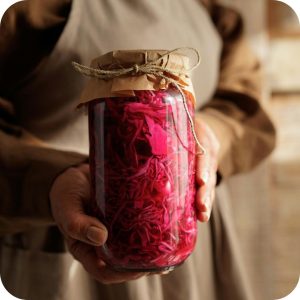
Autumn has always been the season to prepare for colder times.
-
Sauerkraut – shred cabbage, add salt, press into a jar, and let it ferment for 1–2 weeks.
-
Pickled vegetables – carrots, cucumbers, beets, or mixed autumn harvests.
-
Kimchi – spicy, Korean-style fermentation with cabbage and radish.
-
Herbal tea blends – mix dried rosehips, mint, or thyme for winter evenings.
Fermentation doesn’t just preserve food – it creates probiotics that support digestion and immunity when we need it most.
Seasonal Health and Wellbeing
Autumn often brings sudden temperature swings and less sunlight, which is why people naturally turn to warming, grounding foods:
-
Soups and stews from root vegetables, pumpkin, and beans.
-
Spices like cinnamon, cloves, and ginger, which not only warm but also support circulation and immunity.
-
Herbal teas – rosehip for vitamin C, thyme for coughs, and elderberry syrup for colds.
Traditional systems like Ayurveda see autumn as the season of dryness and wind, so warm, moist, and nourishing foods help balance the body.
Autumn Traditions Around the World
Autumn is also a season of festivals, rituals, and gratitude.
-
Europe
-
Harvest festivals / Dožínky – wreaths, bread, and dances to celebrate the end of harvest.
-
Samhain (Celtic) – honoring ancestors; believed to inspire modern Halloween.
-
Oktoberfest (Germany) – beer, music, and celebration of hops and harvest.
-
All Souls’ Day (Dušičky) – candles and flowers for ancestors.
-
-
Asia
-
Mid-Autumn Festival (China, Vietnam) – mooncakes, lanterns, and family gatherings.
-
Chuseok (Korea) – Thanksgiving to ancestors with traditional food.
-
Tsukimi (Japan) – “moon viewing” with rice dumplings and poetry.
-
-
North America
-
Thanksgiving (USA, Canada) – gratitude shared over a harvest meal.
-
Local harvest fairs – apples, pumpkins, and community gatherings.
-
-
Latin America
-
Día de los Muertos (Mexico) – colorful altars, marigolds, and family feasts.
-
-
Africa
-
Yam Festival (Ghana, Nigeria) – celebrating yam harvest with dance and rituals.
-
-
Oceania
-
While autumn falls in March–May, indigenous cultures mark seasonal cycles with gatherings and food-sharing rituals.

Among many autumn activities and traditions, Diwali stands out as India’s Festival of Lights — a joyful celebration of light over darkness, family unity, and new beginnings.
-

Autumn Checklist – Things to Try This Season
-
Craft with chestnuts, acorns, and leaves.
-
Pick and store apples and pears.
-
Go mushroom foraging (with a field guide or an experienced person).
-
Dry herbs and rosehips for winter teas.
-
Make a jar of sauerkraut or pickled vegetables.
-
Light a lantern or carve a pumpkin.
-
Try celebrating a tradition from another culture, like moon-viewing.
A Little Autumn Story
One chilly evening, the air was filled with the smoky scent of fallen leaves. A grandmother carried a basket of apples into the kitchen, her grandchildren trailing behind with pockets full of acorns and bright yellow leaves. They spread the treasures on the table: mushrooms from the forest, rosehips from the hedge, and a few plums that clung stubbornly to the tree. The children began building tiny animals from chestnuts while the grandmother sliced apples for drying. Outside, the last rays of the sun lit the sky in gold and crimson. “This,” she said, pouring hot tea into mugs, “is how autumn keeps us warm – with its colors, its flavors, and the memories we make together.”
Closing Thoughts
Autumn is not only about colder weather or shorter days – it’s about color, abundance, and connection. Whether you’re crafting chestnut animals with children, drying rosehips for winter tea, or lighting a lantern to remember loved ones, autumn gives us countless ways to celebrate life’s cycles.
What about you – how do you enjoy autumn? Do you forage, craft, or join cultural traditions in your region?
Other interesting autumn and winter tips right here:
Foraging mushrooms in winter? Yes!
Golden Milk: Best when you need a complete restart
Fire Cider Recipe and Benefits: A Warming Winter Tonic
Thanks for reading! Stay connected with us on Facebook for the latest updates, Instagram for beautiful snapshots and behind-the-scenes content, and YouTube for meditation, calming videos, nature sceneries, and healthy cooking videos. Join our Health and Nature Life community and let’s journey together towards a healthier, more natural lifestyle!